
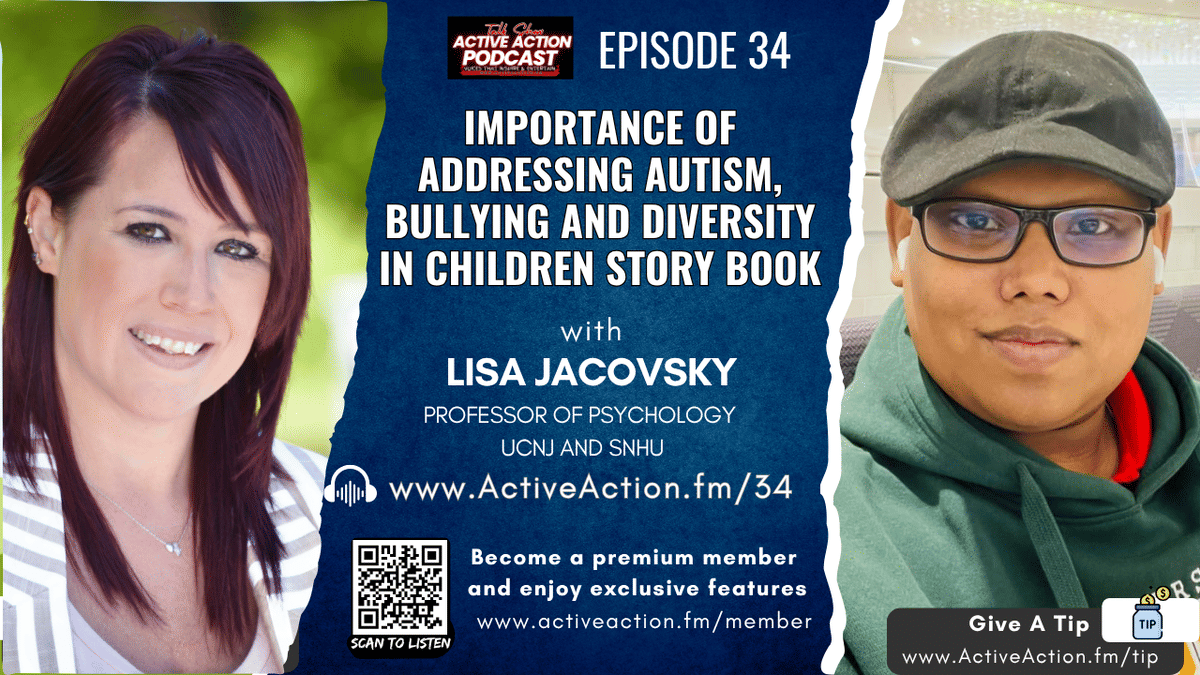
Welcome to the world of children's story book, where stories serve as windows into unknown worlds, fostering empathy, understanding, and curiosity from an early age. In a recent episode of the Active Action Podcast, Dr. Nazif had an engaging conversation with Lisa, an esteemed children's book author and psychology professor, about the significant role of literature in addressing vital societal themes like autism, bullying, and diversity. This blog post delves into their discussion, highlighting key insights and the monumental impact of books.
The Importance of Inclusivity in Children's Books
Lisa, an award-winning author, emphasizes that the world is a melting pot, where autism is merely a diverse way of learning. Her books aim to shed light on this perspective, integrating themes of diversity that are crucial for young minds. By presenting autism as a natural part of human diversity, Lisa's work seeks to dismantle prejudices and encourage acceptance.
Books as Tools for Positive Change
Children's books serve as powerful tools to spark meaningful conversations about diversity and empathy. According to Lisa, the stories we tell shape young minds and influence their future perspectives. Books can act as catalysts for change, encouraging children to ask questions and engage in discussions that promote understanding and kindness.
Bringing Words to Life Through Illustrations
Illustrations play a pivotal role in communicating themes to young readers. Lisa explains that visuals bring stories to life, helping children see themselves in the narratives and relate to the characters. This representation and relatability are crucial for building empathy and ensuring that all children feel seen and understood.
Challenges and Triumphs in Diverse Storytelling
Lisa shares her journey of creating authentic and sensitive representations of diverse experiences. Throughout her work, she emphasizes the importance of thorough research and cultural accuracy to ensure her stories resonate authentically with readers. Her commitment to inclusivity is reflected in her collaboration with artists and her dedication to portraying diversity accurately.
Impact and Inspirational Moments
A particularly heartwarming example of Lisa's positive impact comes from a festival she attended, where a young boy on the autism spectrum remembered her reading at his school a year prior. This moment underscored the significant role her books play in shaping memories and creating lasting impressions on young readers.
Encouraging Aspiring Authors
For aspiring authors eager to tackle sensitive topics like autism and diversity, Lisa advises basing their writing on personal experiences or conducting thorough research. Understanding the community and networking with other authors or families can provide the necessary insights to craft sensitive and meaningful narratives.
Conclusion
Lisa's dedication to children's literature highlights its transformative power in addressing crucial societal issues. Her work inspires future authors and educators to embrace diversity and use storytelling as a tool for change. As we look to the future of children's literature, it's essential to create stories that reflect the diverse world we live in, fostering empathy and understanding in generations to come.
For those interested in exploring Lisa's work and learning more about her impactful stories, visit her online platform for a free PDF catalog of diverse children's books. Join the movement to create a more inclusive and accepting world, one story at a time.