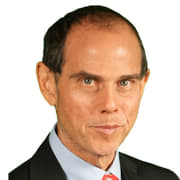

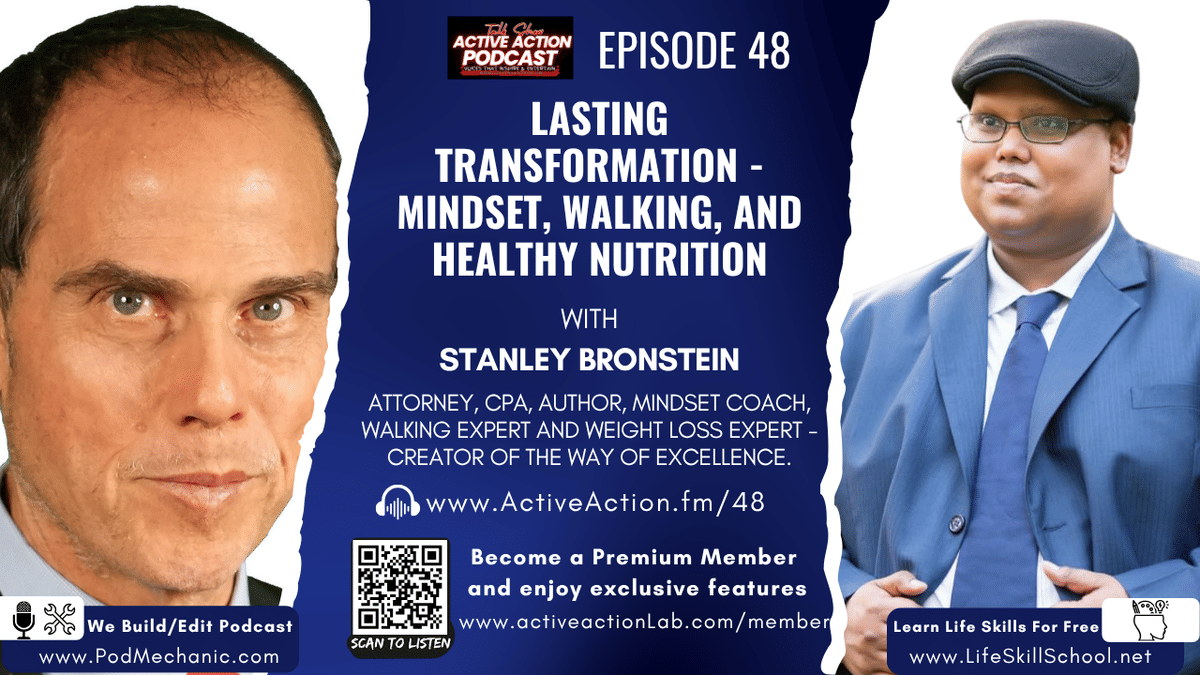
Most weight loss stories follow a familiar arc: dramatic before-and-after photos, a magic diet, a supplement, or a surgery. Stanley Bronstein's story is nothing like that.
Stanley is an attorney, CPA, life coach, and author. But before any of those titles, he was a man who weighed 367 pounds, avoided doctors, drank scotch daily, consumed six liters of diet soda every day, and was quietly heading toward an early grave. At 49 years old, four months before his 50th birthday, he asked himself a simple but devastating question: Where will I be in five years if I keep doing what I'm doing?
His honest answer was one word: Dead.
That single moment of clarity on February 1st, 2009 — what Stanley calls his "rebirth day" — launched one of the most remarkable personal transformations I have ever heard. Seventeen years later, at age 66, Stanley weighs 145 pounds, has bloodwork that rivals a healthy 30-year-old, has never had surgery or taken weight loss drugs, and has walked enough steps to circle the globe nearly three times.
I had the privilege of hosting Stanley on the Active Action Podcast, and the conversation left me — and I know it will leave you — with both inspiration and a concrete roadmap.
The First Step: Permanent Action, Not Temporary Fixes
One of the most important things Stanley said early in our conversation was this: "When you make temporary changes, you get temporary results. When you make permanent changes, you get permanent results."
This is where most people, myself included, have stumbled. We go on a diet. We lose weight. Life gets busy or hard. We go back to old habits. The weight returns — and often brings more with it. I openly shared with Stanley that I lost 38 kilograms in 2021, only to regain it all and then some. He smiled and said he'd done the same thing many times.
The difference, he explained, is the moment you stop treating healthy choices as a temporary program and start treating them as your permanent identity.
On February 1st, 2009, Stanley didn't start a diet. He poured his last bottle of scotch down the toilet and flushed it. He did the same with his soda pop. He quit red meat cold turkey — remarkable for a man whose father was a butcher and who grew up with unlimited free meat at home. And he started walking. Not because he felt ready, but because he decided.
The Gradual Evolution of a Healthy Diet
What I found deeply reassuring about Stanley's story is that he didn't overhaul everything at once and never looked back. His dietary journey evolved over more than a decade, in stages, each one responding to what his body and results were telling him.
Stage 1 (2009): Quit alcohol, quit soda, quit red meat. Lost nearly 50 pounds in four months.
Stage 2 (~5 years in): Gave up chicken and turkey, becoming vegetarian. Noticed major improvements in energy, strength, and immunity — including fending off COVID with just two days of feeling slightly off.
Stage 3 (~10 years in): Despite walking 15–20 kilometers a day, his weight had plateaued. He realized the issue wasn't exercise — it was dairy. He eliminated butter, cheese, milk, and ice cream, going fully vegan. The result? The remaining weight melted off.
This progression teaches us something vital: listen to your body and be willing to keep adjusting. There is no single perfect diet, but there is always room to improve.
You Cannot Exercise Your Way Out of a Poor Diet
This was one of the most direct and useful statements in our entire conversation. Stanley put it plainly: if you are eating donuts, cookies, butter, and processed food in large quantities, it doesn't matter how many steps you log. You will not lose the weight.
Exercise matters deeply — Stanley is living proof. But it works in partnership with nutrition, not as a substitute for it. If you are stuck on a plateau despite being physically active, the honest question to ask yourself is: what am I still eating that is holding me back?
What Is Processed Food, Really?
I asked Stanley to define processed food because it's a term that gets thrown around loosely. His answer was practical and memorable: processed food is anything that came out of a factory. It has a long list of ingredients — many of which you can't pronounce — and it is loaded with added sugar and added sodium, both inserted purely to make the product taste better so you buy more of it.
He was equally clear about carbohydrates, pushing back on the popular idea that all carbs are bad. Natural carbohydrates — like those in whole fruit — come packaged with fiber, which slows how your body absorbs the sugar and prevents blood sugar spikes. Refined carbohydrates, like white sugar or processed snacks, have had that fiber stripped out. The result is an immediate blood sugar spike and, over time, a path toward diabetes.
Stanley himself eats large amounts of fruit daily and had an A1C of 5.2 at his most recent physical — well below the 5.7 threshold for pre-diabetes.
Three Simple Starting Points
If you want to begin and feel overwhelmed, Stanley offers three accessible, non-extreme starting habits:
1. Eat less processed food. Not zero — less. Start reducing packaged, boxed, and fast food. This is a goal anyone can work toward, regardless of schedule or budget.
2. Stop eating five hours before bed. Give your body time to process what you've eaten before you sleep. If you go to bed at 11pm, finish eating by 6pm.
3. Walk 20 minutes a day. The American College of Sports Medicine recommends 150 minutes of cardio per week. Twenty minutes a day gets you to 140 minutes — close enough. If 20 minutes feels like too much right now, do 10. Do 5. Just start moving.
For busy people who say they don't have time to eat well, Stanley suggests packing a small cooler or bag: raw unsalted nuts (or air-fried for eight minutes to bring out the flavor without adding oil), fresh fruit, and a simple homemade sandwich. Small preparation, big payoff.
The Four Pillars of Lasting Success
Near the end of our conversation, Stanley shared his four-part framework — the same system that lives on his website and underpins everything he teaches.
1. Willingness. You must be willing to do what it takes — not for a month, not for a year, but permanently. And here is the reframe that changes everything: you don't have to do it. You get to do it. You are alive. You are breathing. That is a privilege. Use it.
2. Belief. You are more powerful than you ever imagined. Stanley — a confident man who was raised to believe in himself — said this journey surpassed even his own expectations of what he could do. If he can be surprised by his own capacity, so can you. Believe it before you fully feel it.
3. Discipline. This is not punishment. Discipline means identifying your negative habits and replacing them with positive ones. Alcohol — gone. Daily soda — gone. Sedentary lifestyle — gone. In their place: daily walking, whole food eating, intentional movement.
4. Commitment. When you are 100% committed, decisions become easier. Stanley was offered gourmet cupcakes and cookies before Christmas. The thought of eating them genuinely didn't occur to him — not because he lacks willpower, but because he is fully committed. Commitment removes the daily negotiation. You've already decided.
90% of Weight Loss Is Between Your Ears
This may be the most important line in the entire episode. Stanley said it plainly and I believe it completely: "90% of what it takes to lose weight in a healthy manner is between your ears."
Your self-talk, your word choices, your beliefs about what is "hard" — all of it shapes your results. Stanley pointed out that walking 220 pounds of extra weight through daily life is hard. Walking freely at a healthy weight is easy by comparison. We just forget that.
The goal is not perfection. The goal is excellence. You will have bad days. You will mess up. That's not failure — that's proof you're trying. The question is whether you get back up. As Stanley put it: success requires two things — starting and never stopping.
A Personal Note
I shared openly with Stanley that I am on my own weight loss journey right now, having lost about 4 kilograms this past month. His encouragement was immediate and genuine, and he extended a personal invitation to connect further and support my progress — which I am taking him up on. I plan to share that journey with you, our listeners, as it unfolds.
If Stanley's story resonates with you, I encourage you to visit his website at thewayofexcellence.com, where you will find his books, resources, and the Million Pound Weight Loss Challenge — all available for free. Because as Stanley reminded us, for him, the mission is more important than the money.
Until next time — stay active, take action, and remember: you don't have to do this. You get to.
Connect with Stanley Bronstein: thewayofexcellence.com | millionpoundweightlosschallenge.com Learn more and access all resources: activeactionlab.com